After More Than 100 Years: A New Wild Cat Species Has Been Discovered in South America
After More Than 100 Years: A New Wild Cat Species Has Been Discovered in South America
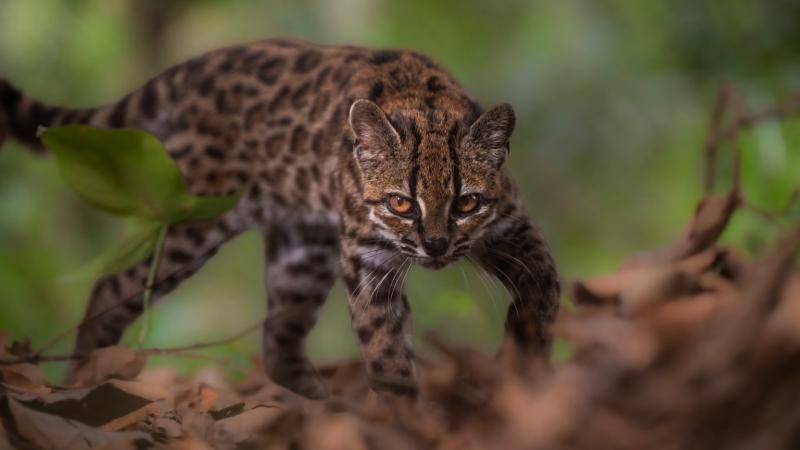
Scientists have made a remarkable discovery in Bolivia, identifying a previously unknown wild cat species more than 100 years after the last discovery of a completely new felid species.
The mysterious cat was found in the Yungas forests of Bolivia, a mountainous region known for its humid climate and rich biodiversity. After detailed genetic analysis, an international team of researchers determined that the animal represents a distinct evolutionary lineage within the group commonly known as tiger cats or tigrillos.
The newly identified wild cat is relatively small, measuring about 46 centimeters in length and weighing approximately 1.4 kilograms. Its light brown fur is covered with irregular rosette-shaped markings, giving it a distinctive appearance.
Genetic Analysis Changes the Wild Cat Family Tree
The discovery was made possible through detailed genetic research. Scientists analyzed the DNA of 38 cats collected from different parts of South America and from museum collections.
The results revealed that tiger cats, which had previously been treated as a single species, actually consist of five genetically distinct species.
Researchers found that the Tilcayo lineage separated from other tiger cat lineages approximately 1.4 million years ago.
The study also identified another distinct tiger cat subspecies in Peru's Yungas region, named Leopardus tigrinus antisuyo.
These findings could have important consequences for wildlife conservation because the conservation status of each genetically distinct lineage may need to be assessed separately.
What Do Scientists Know About the New Cat?
Despite the discovery, scientists still know relatively little about the animal's behavior and biology.
Researchers have found clues about its diet by examining fecal samples. The remains of rodents were detected, suggesting that small mammals may form an important part of its diet.
Camera-trap observations also suggest that the animal may be primarily active at night.
However, researchers say much more fieldwork is needed to understand its population size, behavior, reproduction, territory and ecological role.
Yungas Forests Face Growing Environmental Threats
The discovery comes at a time when the Yungas forests are facing increasing environmental pressure.
Deforestation, agricultural expansion, human-caused fires and mining activities are destroying and fragmenting natural habitats across the region.
Scientists say protecting the newly identified cat will require more than simply recognizing it as a separate species. Preserving its habitat and maintaining connections between fragmented forest areas will also be essential.
Restoring damaged forest areas and protecting ecological corridors could help wildlife populations move between remaining habitats.
A Discovery That Highlights How Much We Still Don't Know
The discovery also carries a broader scientific message.
Eduardo Eizirik, one of the senior researchers involved in the study, emphasized that the finding demonstrates how much remains to be discovered even among animal groups that scientists have studied for decades.
The fact that a new felid lineage can still be identified shows that many species around the world may remain poorly understood or completely unknown to science.
There is also an urgent conservation concern. Some species may be at risk of disappearing before scientists fully understand their existence, distribution and ecological importance.
The discovery of this new wild cat is therefore not only a scientific breakthrough but also a reminder of the importance of protecting the forests and ecosystems where Earth's undiscovered biodiversity still survives.