Artificial Intelligence Predicts How Long Cancer Patients May Live
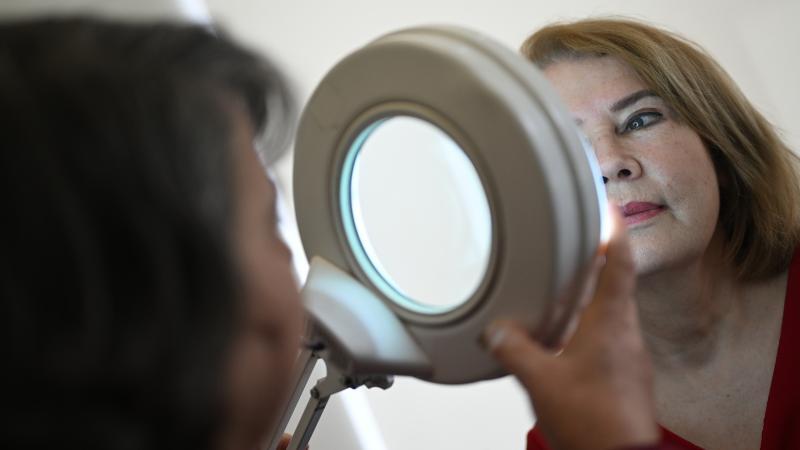
AI Can Predict Cancer Patients’ Biological Age and Survival Risk From Facial Photos
Scientists in the United States have developed artificial intelligence tools that can estimate cancer patients’ biological age and assess their risk of death using facial photographs.
According to foreign media reports cited by Faktxeber.Az, researchers at Mass General Brigham developed two tools based on an artificial intelligence model called “FAHR-Face,” which was trained on more than 40 million facial images.
According to a study published in The Lancet Digital Health, “FAHR-FaceAge” estimates a person’s biological age based on their facial appearance, while “FAHR-FaceSurvival” assesses their survival risk.
The study, conducted among cancer patients receiving radiation therapy, produced notable findings. Patients whose biological age was estimated by AI to be at least five years older than their actual age had a 21% higher risk of death over four years compared with other patients.
Conversely, patients whose estimated biological age was at least five years younger than their actual age had a 17% lower risk of death.
Researchers believe this technology could help assess patients’ physical condition before surgery and other intensive cancer treatments.
However, experts caution that assessments based solely on facial photographs are not sufficient to make treatment decisions.
Miroslav Bober, an artificial intelligence expert at the University of Surrey, described the research as a significant advancement but noted that the technology is not yet ready for clinical use.
According to Bober, further research is needed to determine how much additional value AI assessments provide beyond doctors’ evaluations and how accurately the tools perform across different patient groups.
The researchers aim not to replace doctors with this technology, but to help medical professionals make better-informed and more personalized treatment decisions for cancer patients.