This Mistake on Your Phone Could Cost You All Your Money — Here's How to Protect Yourself
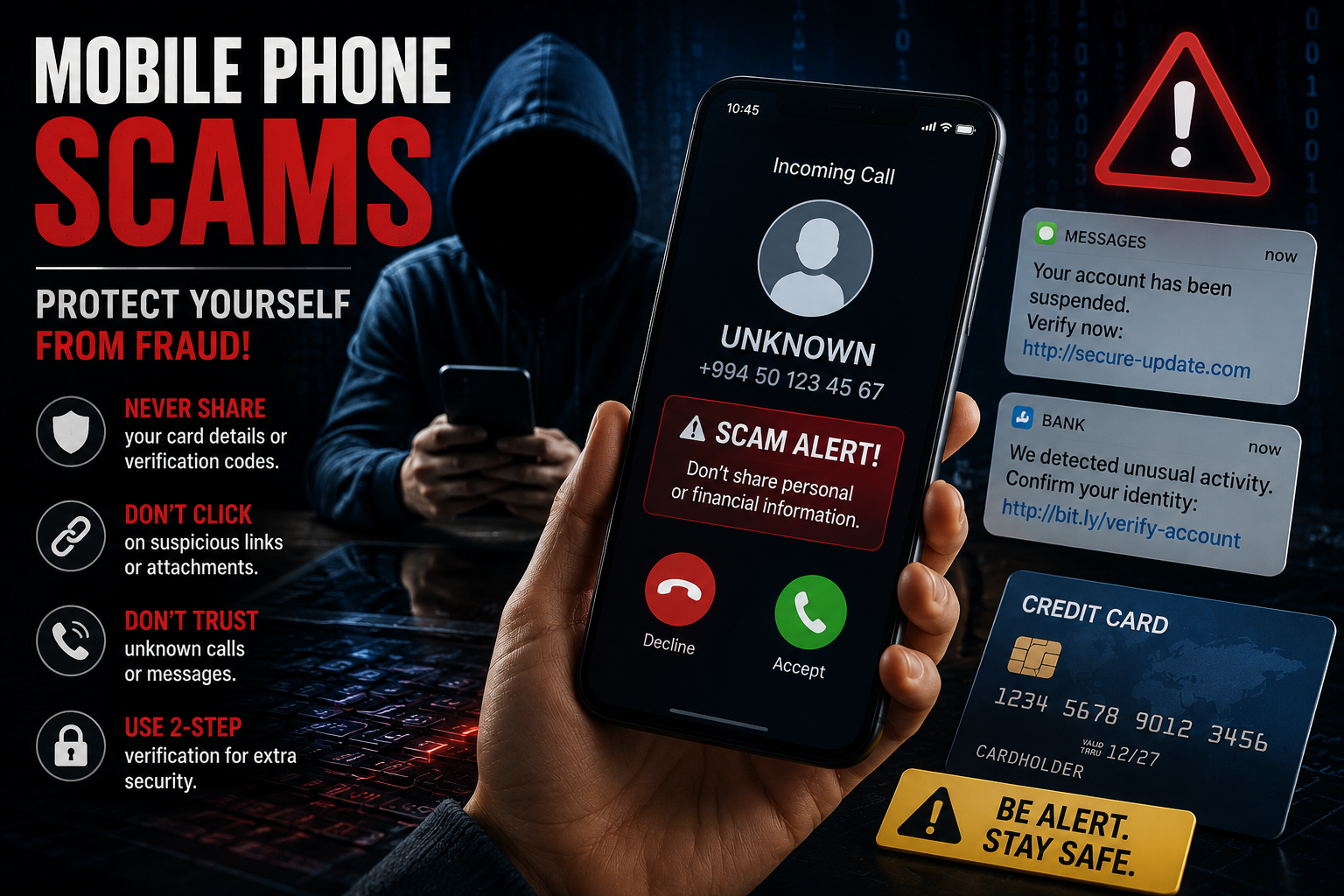
In recent years, mobile phone scams have become increasingly common in both Azerbaijan and around the world. Cybercriminals use a variety of tactics to steal personal information and bank card details from unsuspecting victims. Security experts say that following a few simple safety practices can significantly reduce the risk of becoming a target.
The Most Common Mobile Phone Scams
1. Fake SMS Messages (Smishing)
Scammers often pose as banks, mobile operators, or government agencies and send fake text messages. These messages typically include phrases such as "Your card has been blocked," "Verify your account," or "You have won a prize." Clicking the provided link may allow criminals to steal your personal or financial information.
2. Fake Phone Calls (Vishing)
Fraudsters may pretend to be bank employees, police officers, or other trusted officials and ask for your card number, PIN, or one-time verification code. Remember: no legitimate bank will ever ask for this information over the phone.
3. Fake Accounts on Messaging Apps
On platforms such as WhatsApp and Telegram, scammers sometimes create fake profiles using the names or photos of people you know. They may ask for money or send malicious links. If you receive such a message, contact the person through another communication channel before taking any action.
4. Fake Lottery and Giveaway Scams
Messages claiming "You have won a smartphone" or "You have received a cash prize" are common scam tactics. Victims are often asked to provide personal information or pay a so-called "delivery fee" before receiving the supposed prize.
5. Malicious Mobile Apps
Downloading apps from unofficial sources can expose your phone to malware, allowing cybercriminals to steal your personal information, passwords, or banking details.
How to Protect Yourself
Never share your bank card PIN, CVV code, or one-time verification codes.
Be cautious when receiving calls or messages from unknown numbers.
Avoid clicking suspicious links.
Download apps only from official app stores.
Keep your phone's operating system and applications updated.
Enable Two-Factor Authentication (2FA) whenever possible.
Turn on SMS or push notifications for your bank account so you can monitor all transactions in real time.
What Should You Do If You Become a Victim?
If you believe you have shared your banking information or notice suspicious activity on your account, contact your bank immediately and request that your card be blocked. Afterward, report the incident to the appropriate law enforcement authorities or your country's cybercrime unit.
Conclusion
While digital technology has made everyday life more convenient, it has also created new opportunities for cybercriminals. Staying alert, following basic cybersecurity practices, avoiding suspicious messages and calls, and never sharing sensitive personal or financial information are the most effective ways to protect yourself from mobile phone scams.