What Is Artificial Intelligence? A Simple Explanation
Artificial Intelligence (AI) is one of the most important technologies shaping the modern world. From smartphones and search engines to navigation apps, recommendation systems and chatbots, artificial intelligence is already part of everyday life.
But what exactly is AI? How does it work? And why has it become so important?
In simple terms, artificial intelligence is a field of technology that enables computer systems to perform tasks that normally require aspects of human intelligence, such as recognizing patterns, understanding language, making predictions, solving problems and supporting decisions.
What Is Artificial Intelligence?
Artificial intelligence, commonly called AI, refers to computer-based systems designed to perform tasks that can involve learning, reasoning, perception, language understanding, prediction or decision-making.
AI is not a single program or machine.
It is a broad field that includes many different technologies and approaches.
For example, an AI system can:
recognize objects in an image;
understand spoken language;
translate text;
recommend videos or products;
detect patterns in large amounts of data;
generate text, images or audio;
help predict possible outcomes;
assist humans with complex tasks.
NIST notes that AI can involve systems that make predictions, recommendations or decisions based on human-defined objectives.
How Does AI Work?
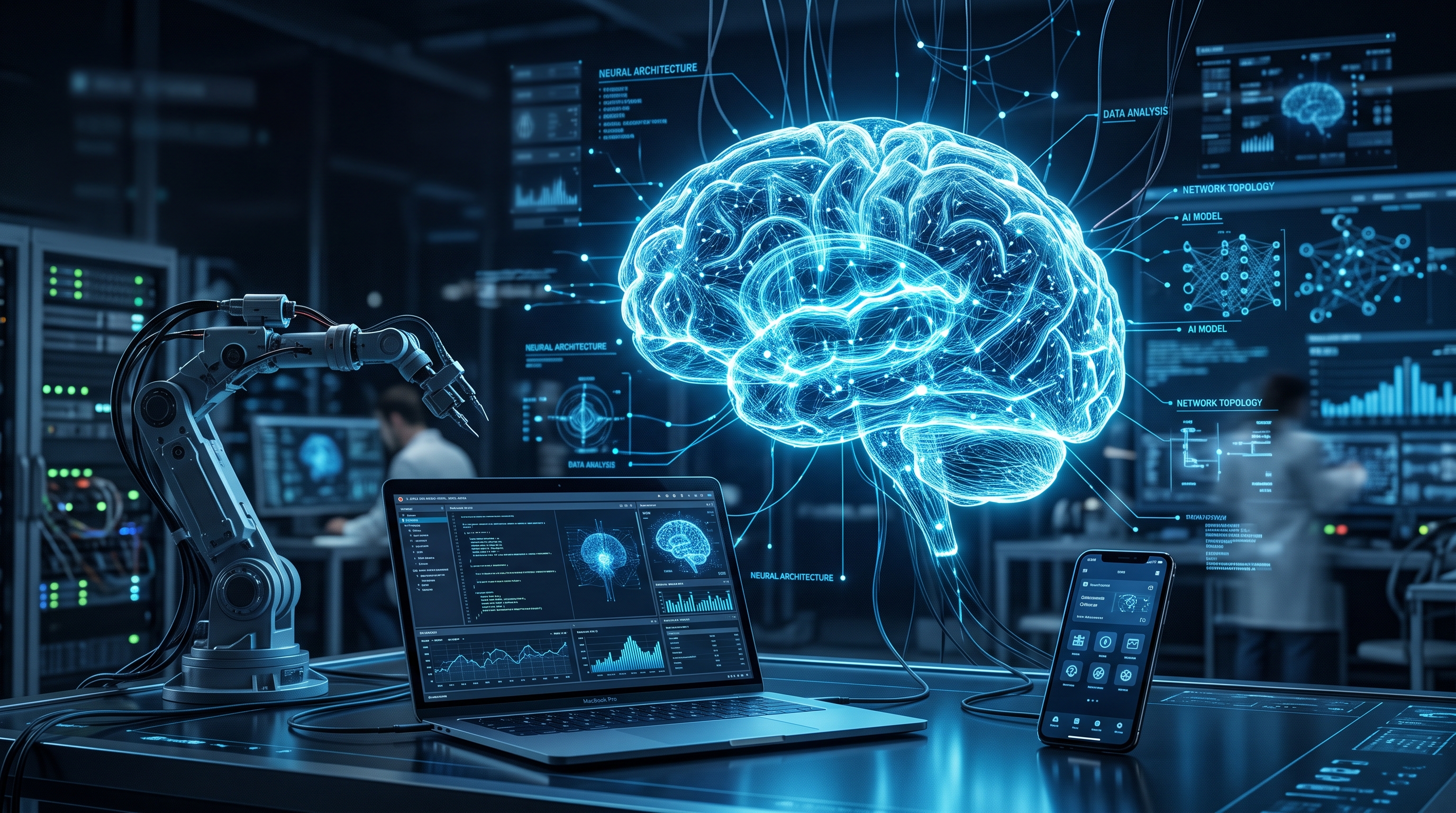
At a basic level, many modern AI systems depend on three important ingredients:
Data + Algorithms + Computing Power
Data provides examples from which an AI system can identify patterns.
Algorithms provide the mathematical and computational methods used to process that information.
Computing power allows these systems to process enormous amounts of data and perform complex calculations.
One of the most important technologies behind modern AI is machine learning.
Machine learning allows computer systems to learn patterns from data and improve their performance rather than relying entirely on manually written instructions.
Imagine teaching a computer to recognize cats.
Instead of manually describing every possible characteristic of a cat, developers can provide a large collection of labeled images. A machine-learning system can analyze those examples and learn patterns associated with cats.
When it receives a new image, the system can then estimate whether the image contains a cat.
This is a simplified example, but it illustrates an important idea behind machine learning.
What Is Machine Learning?
Machine learning (ML) is a subset of artificial intelligence.
Rather than programming every possible rule, developers create systems that can learn patterns from data.
NIST defines machine learning as the development and use of computer systems that adapt and learn from data with the goal of improving accuracy.
Machine learning is used in many applications, including:
recommendation systems;
fraud detection;
image recognition;
speech recognition;
spam filtering;
predictive maintenance;
search engines;
personalized online services.
Modern AI systems often combine machine learning with other technologies, including deep learning and natural language processing.
What Is Deep Learning?
Deep learning is a specialized area of machine learning that uses multi-layered artificial neural networks.
These systems can process complicated patterns in areas such as images, speech and language.
Deep learning has played a major role in recent advances in AI because it can work effectively with very large datasets and powerful computing systems.
Many modern AI applications use deep-learning techniques as part of their underlying technology.
What Is Generative AI?
One of the most visible developments in artificial intelligence is generative AI.
Generative AI systems can produce new digital content based on patterns learned from data.
Depending on the system, this can include:
text;
images;
audio;
video;
computer code.
NIST defines generative AI as a class of AI models that generate derived synthetic content such as images, video, audio and text.
This is what makes tools such as modern AI chatbots and image-generation systems different from many traditional AI applications.
A traditional AI system might classify an image as a dog.
A generative AI system can potentially create a completely new image of a dog from a written description.
Where Do We Use AI?
You may be using artificial intelligence more often than you realize.
Smartphones
AI can help with:
facial recognition;
voice assistants;
camera image processing;
predictive text;
translation;
spam detection.
Navigation
Navigation applications can analyze information about roads and traffic to help estimate routes and travel times.
Streaming Services
Movie and music platforms can analyze patterns in user behavior to recommend content.
Online Shopping
E-commerce platforms can use algorithms to recommend products based on browsing, purchasing and other available signals.
AI-based systems can help identify spam and suspicious messages.
Healthcare
AI is being researched and used in areas such as medical imaging, research, clinical decision support and other healthcare applications. However, medical AI systems require appropriate validation, oversight and safeguards.
Education
AI tools can assist with explanations, language learning, writing support, tutoring and other educational activities.
AI applications now span sectors including healthcare, finance, transportation, manufacturing, education and entertainment.
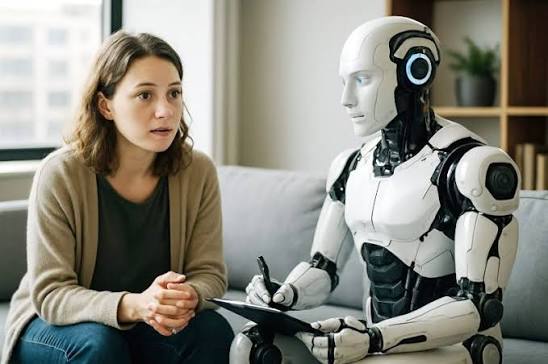
Is AI the Same as a Robot?
No.
A robot is a physical machine that can interact with the physical world.
AI is a technology or collection of techniques that can enable computer systems to perform certain tasks associated with intelligence.
A robot can use AI, but AI does not need a physical robot.
For example, an AI chatbot exists entirely as software.
On the other hand, an industrial robot may use AI to recognize objects or adapt to changing conditions.
Can AI Think Like a Human?
This question is more complicated than it appears.
Today's AI systems can perform impressive tasks involving language, pattern recognition, prediction, image analysis and other forms of computation.
However, this does not mean that they are human minds.
AI systems process information using computational models and learned patterns. They do not automatically possess human consciousness, personal experiences or human understanding simply because they can produce convincing responses.
Therefore, it is useful to distinguish between performing an intelligent task and being a human-like mind.
Can AI Make Mistakes?
Yes.
AI systems can produce incorrect, incomplete or misleading results.
One reason is that AI models learn from data. If training data contains errors, gaps or biases, these can affect system performance.
AI systems can also produce confident-looking answers that are incorrect.
This is particularly important when AI is used for areas involving health, finance, law, safety or other high-impact decisions.
Human oversight, testing, monitoring and appropriate safeguards remain important when AI systems are deployed.
NIST's work on trustworthy AI emphasizes characteristics such as reliability, security, resilience, privacy and responsible use.
What Are the Benefits of Artificial Intelligence?
AI can provide several potential benefits.
Speed
Computers can process large amounts of information much faster than humans in many tasks.
Automation
AI can automate repetitive activities and help people handle routine work.
Pattern Recognition
AI can identify patterns in large datasets that may be difficult for humans to detect manually.
Personalization
AI can help tailor recommendations and services to individual users.
Assistance
AI can support professionals, researchers, students, developers and many other groups with information-processing tasks.
New Possibilities
Generative AI has also made it easier for people to create text, images, audio, video and software using natural-language instructions.
What Are the Risks of AI?
Artificial intelligence also creates important challenges.
These include:
inaccurate information;
privacy concerns;
cybersecurity risks;
biased outcomes;
misuse of generated content;
deepfakes and manipulated media;
intellectual-property questions;
potential changes to employment;
overreliance on automated systems.
The risks vary significantly depending on how an AI system is designed and where it is used.
This is why AI development increasingly focuses not only on capability but also on reliability, safety, transparency, security and accountability.
Will AI Replace Human Jobs?
AI is changing how many tasks are performed, but the relationship between AI and employment is more complicated than simply saying that AI will “replace all jobs.”
Some tasks can be automated.
Other tasks may be changed or accelerated by AI while humans continue to make important decisions.
New roles can also emerge around AI development, deployment, evaluation, governance and oversight.
The impact will vary considerably between occupations and industries.
The more useful question may therefore be:
Which tasks can AI automate, and which tasks still require human judgment, responsibility, creativity or physical interaction?
What Is the Future of AI?
Artificial intelligence is continuing to develop rapidly.
Future systems may become more capable at understanding different types of information, interacting with software, assisting with scientific research and supporting complex workflows.
At the same time, technical limitations and questions surrounding safety, privacy, security and responsible use will remain important.
AI is therefore not simply a story about smarter machines.
It is also a story about how humans choose to design, deploy and use those machines.
AI in Simple Terms
If you had to explain artificial intelligence in one sentence, you could say:
AI is technology that enables computers to perform tasks that involve capabilities commonly associated with human intelligence.
Machine learning allows many AI systems to learn patterns from data.
Deep learning uses multi-layered neural networks for complex tasks.
Generative AI can create new content such as text, images, audio and video.
Together, these technologies are changing how people work, communicate, search for information and create digital content.
Final Thoughts
Artificial intelligence is no longer just a concept from science fiction.
It is already present in many everyday technologies, from smartphones and search engines to navigation, recommendations and generative AI tools.
Understanding the basics of AI does not require advanced mathematics or computer science.
The key idea is simple:
AI uses computational systems to process information, identify patterns and perform tasks that can involve forms of learning, prediction, reasoning or decision-making.
As AI continues to evolve, knowing what it can do—and understanding its limitations—will become increasingly important for everyone.