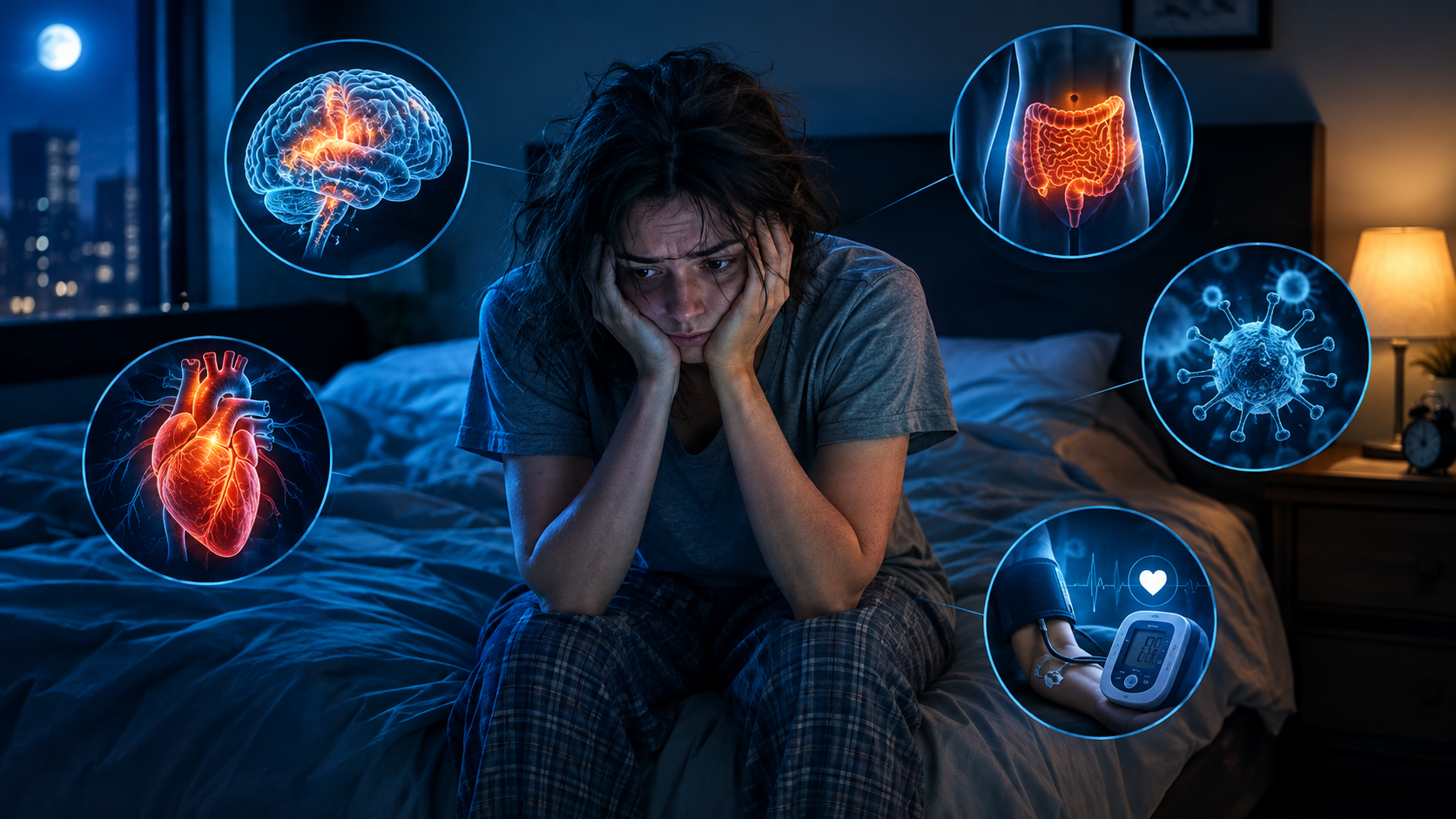
What Happens to Your Body When You Stop Walking Every Day?

Walking is one of the simplest forms of physical activity. It requires no gym membership, special equipment or advanced training. Yet taking regular walks can contribute to cardiovascular health, physical fitness, mental well-being and healthy aging.
So what happens when you suddenly stop walking every day?
The answer is not as simple as “you become unhealthy.” Missing a few walks does not automatically cause serious health problems. The bigger concern is what happens when a reduction in walking becomes a long-term pattern of physical inactivity and more time spent sitting.
The World Health Organization considers walking a form of physical activity and emphasizes that all movement counts. It also warns that insufficient physical activity and excessive sedentary behavior are associated with important health risks.
1. Your Daily Energy Expenditure May Decrease
Walking uses energy. If you suddenly remove your regular walks from your routine without replacing them with other physical activity, your overall daily movement may decrease.
Over time, this can make it easier to gain weight if calorie intake remains the same while energy expenditure falls.
However, body weight is influenced by many factors, including diet, metabolism, sleep, age and other forms of physical activity. Therefore, stopping daily walks does not automatically mean that someone will gain weight.
The important factor is the overall balance between movement and energy intake.
2. Your Cardiovascular Fitness Can Decline
Walking regularly gives your cardiovascular system opportunities to work.
When physical activity decreases substantially, your body receives less of this regular stimulus. Over time, reduced activity can contribute to lower physical fitness.
Regular physical activity is associated with a lower risk of cardiovascular disease and stroke. The CDC also reports that physical activity can help lower blood pressure and reduce the risk of heart disease and stroke.
This does not mean that missing a few days of walking will suddenly damage your heart. The concern is persistent inactivity over longer periods.
3. Your Muscles May Become Less Active
Walking involves several muscle groups, particularly in the legs and lower body.
If walking is replaced by long periods of sitting, those muscles are used less frequently. A prolonged reduction in physical activity can contribute to declining muscle fitness and physical function.
This becomes especially relevant as people get older.
Regular physical activity helps maintain mobility, balance and independence. The WHO specifically recommends physical activity for older adults because it can help improve physical function and reduce the risk of falls.
4. Your Body May Become Less Efficient at Everyday Movement
Walking is not only exercise. It is also part of everyday life.
Walking to work, shopping, climbing stairs, moving around the house or taking a short evening walk all contribute to daily movement.
When people become less active, ordinary activities can gradually feel more demanding.
This is one reason maintaining movement throughout the day can be useful rather than relying entirely on a single workout.
5. Your Mood May Be Affected
Physical activity is connected not only to physical health but also to mental well-being.
The CDC reports that regular physical activity can reduce symptoms of anxiety and depression and can support better sleep.
Walking outdoors can also provide additional environmental and social benefits. A walk can mean time away from a screen, exposure to daylight and an opportunity to interact with other people.
This does not mean walking is a treatment for mental health conditions. But regular movement can be one component of a healthy lifestyle.
6. Your Sleep May Change
Physical activity can also influence sleep.
According to the CDC, physical activity can improve sleep quality.
If daily walking disappears and is replaced by a much more sedentary routine, some people may notice changes in their sleep patterns.
Again, sleep is influenced by many factors, including stress, caffeine, screen use, work schedules, medical conditions and the sleep environment.
Walking alone cannot guarantee better sleep, but regular physical activity is part of a healthy sleep-supporting lifestyle.
7. Long Periods of Sitting Become More Important
There is an important distinction between not walking and being sedentary.
Someone might stop taking a daily walk but still remain physically active through cycling, swimming, sports, household work or another form of exercise.
The bigger concern is when less walking means that a person spends much more time sitting or lying down while awake.
WHO defines sedentary behavior as periods of low energy expenditure while awake, such as sitting or reclining. Higher amounts of sedentary behavior are associated with poorer health outcomes, including cardiovascular disease and type 2 diabetes.
8. Your Blood Sugar Regulation May Be Affected
Regular physical activity plays an important role in metabolic health.
The CDC reports that regular physical activity can lower the risk of developing type 2 diabetes and can help people manage some existing chronic conditions.
If a person becomes significantly less active over a long period, they lose some of the health benefits associated with regular movement.
For people who already have diabetes or another medical condition, individual activity recommendations may be different and should be discussed with a healthcare professional.
9. Your Brain Benefits From Movement Too
Physical activity is not only about muscles and the heart.
The CDC notes that regular physical activity supports brain health and is associated with a lower risk of dementia and depression.
This does not mean that walking alone prevents dementia. Rather, physical activity is one part of a broader lifestyle associated with healthy aging.
Walking can therefore be viewed as a simple way to incorporate movement into everyday life.
10. You Don't Need to Walk a Specific Number of Steps to Benefit
One common misconception is that everyone must reach exactly 10,000 steps every day.
There is no universal requirement that every adult must walk exactly 10,000 steps.
The CDC emphasizes that adults who sit less and engage in physical activity can gain health benefits, and that some activity is better than none.
The WHO recommends that adults generally get 150–300 minutes of moderate-intensity aerobic physical activity per week, or an equivalent amount of vigorous activity. Walking can be one way to achieve this.
The important point is consistency, not a magic number.
What If You Can't Walk Every Day?
Not everyone can walk every day.
People with injuries, disabilities, chronic illnesses or other limitations may need different forms of physical activity.
WHO emphasizes that physical activity includes many types of movement, including cycling, wheeling, sports, recreation, household activities and movement related to transportation.
For someone who cannot walk comfortably, suitable alternatives may include swimming, stationary cycling, strength exercises or other activities recommended by a healthcare professional.
The goal is not necessarily to walk every single day.
The goal is to avoid unnecessary inactivity and find safe ways to keep the body moving.
How Can You Add More Movement to Your Day?
You do not necessarily need a long workout.
Simple changes can increase daily movement:
Take a short walk during a break.
Walk while talking on the phone.
Use stairs when appropriate.
Walk short distances instead of driving.
Take a brief walk after a meal.
Stand up and move regularly during long periods of sitting.
Spend some free time outdoors.
Choose enjoyable physical activities that you can maintain consistently.
Even small changes can help reduce sedentary time.
WHO's guidelines emphasize that replacing sedentary time with physical activity of any intensity can provide health benefits.
The Bigger Picture
Stopping a daily walk for a few days is not a health disaster.
The more important issue is what happens when walking disappears from your life and is replaced by prolonged inactivity.
Regular movement supports cardiovascular health, physical function, mental well-being and healthy aging. At the same time, spending excessive amounts of time sedentary is associated with several health risks.
The good news is that physical activity does not have to be complicated.
You don't need expensive equipment.
You don't need a gym.
And you don't need to become an athlete.
Sometimes, a simple walk is a practical way to start moving again.
Final Thoughts
Your body is designed to move.
Walking is one of the easiest ways to incorporate movement into everyday life, but it is only one option.
If you stop walking every day, the immediate effects may be small. But if that change leads to a long-term reduction in physical activity and more sedentary time, the consequences can become more significant.
The key is not perfection.
Move more. Sit less. Find activities you enjoy. And make movement part of your everyday life.
This article is for general informational purposes and is not a substitute for personalized medical advice. People with medical conditions, injuries or mobility limitations should consult an appropriate healthcare professional about suitable physical activity.