Cities That Disappeared Overnight in History — A FactXəbər.Az Investigation
An investigation by FactXəbər.Az
Throughout history, there have been cities whose inhabitants went about their lives one day, only for the city to be buried under ash, earth, or water shortly afterward. Some settlements were destroyed within a very short time by earthquakes, volcanic eruptions, and tsunamis. Others may appear to have disappeared overnight, but archaeological evidence suggests that they were actually abandoned gradually.
For this reason, the phrase “cities that disappeared overnight” should not always be understood literally. Archaeological evidence shows that some cities were destroyed by sudden disasters, while others disappeared from history through much longer processes.
So, which cities continue to attract the attention of historians and archaeologists?
Pompeii — The City Frozen Under Ash
One of the most famous examples is the ancient Roman city of Pompeii in Italy.
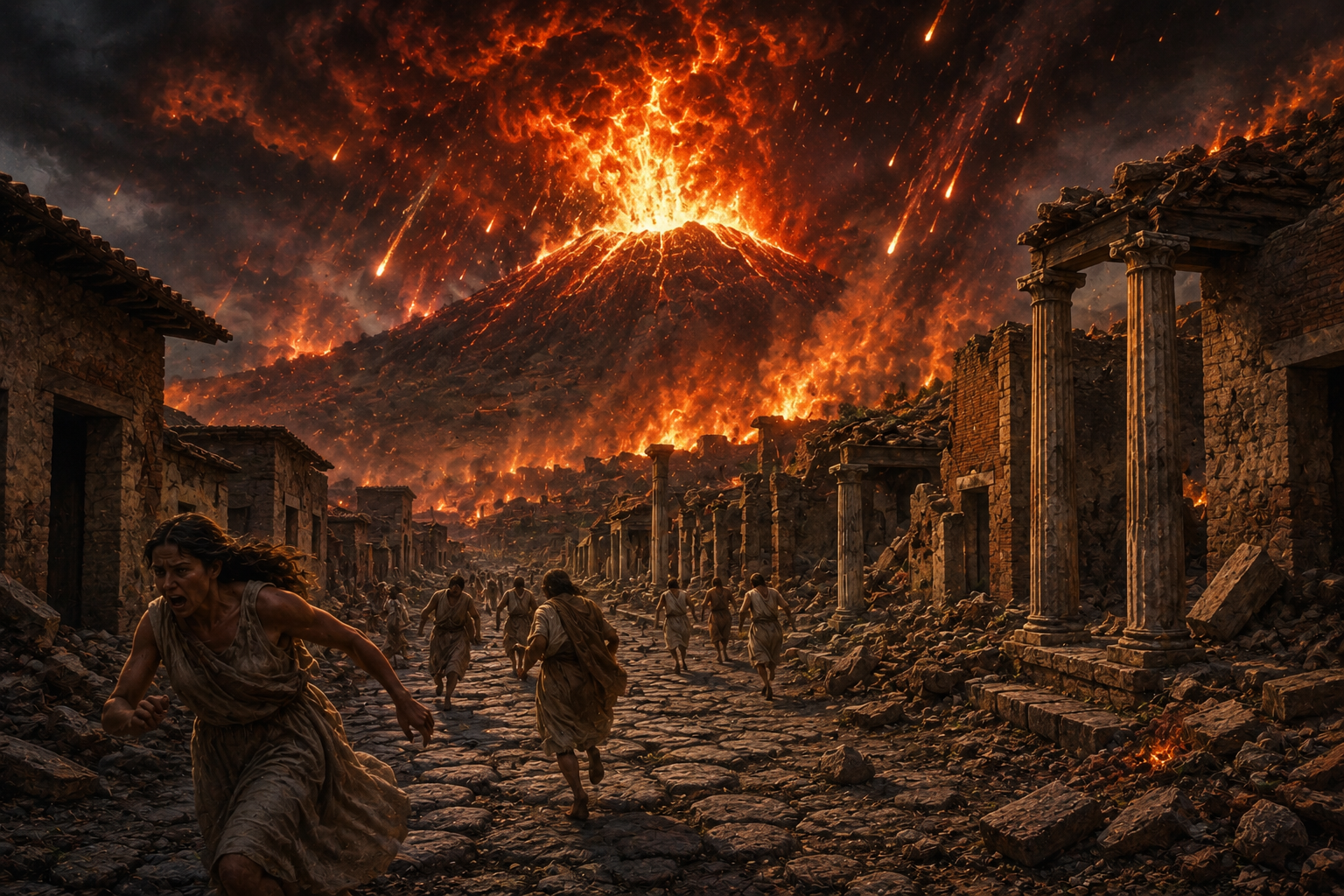
In AD 79, the eruption of Mount Vesuvius buried the city and surrounding areas beneath thick layers of volcanic material. Pompeii, Herculaneum, and other settlements in the region were severely affected by the disaster.
What makes Pompeii extraordinary is that volcanic material preserved streets, houses, shops, and numerous traces of everyday life.
Today, these remains are among the most important archaeological sources for understanding daily life in ancient Roman society.
Pompeii demonstrates that the destruction of a city does not necessarily mean its complete disappearance from history. In some cases, a natural disaster can preserve a remarkable record of everyday life for thousands of years.
Akrotiri — A City Buried by a Volcano
Akrotiri, located on the Greek island of Santorini, is another remarkable ancient settlement.
The Bronze Age city was buried beneath ash and volcanic material following a major eruption.
Archaeological excavations have uncovered buildings, streets, pottery, and remarkably preserved wall paintings.
The frescoes are particularly important. They provide valuable information about the people who lived in the Aegean region thousands of years ago, including their environment, animals, and aspects of everyday life.
Although Akrotiri is often compared with Pompeii, the two disasters occurred many centuries apart. Akrotiri should therefore be viewed as a much earlier example of a settlement affected by a major volcanic eruption.
Helike — Destroyed by an Earthquake and the Sea
The fate of the ancient Greek city of Helike was very different.
In 373 BC, a powerful earthquake and the resulting sea waves destroyed the city. Its remains were later covered by sediments, and the exact location of the ancient settlement remained a subject of debate for centuries.
Archaeologists and geologists have used excavations and sediment analysis to investigate the location and fate of the lost city.
The story of Helike is one of the most fascinating examples of how natural disasters could transform entire settlements in the ancient world.
Port Royal — A City Changed by an Earthquake
Moving closer to modern history, the fate of Port Royal in Jamaica is particularly striking.
In the 17th century, Port Royal was an important Caribbean port. But in 1692, a powerful earthquake caused large parts of the city to sink beneath water and sand.
According to UNESCO, the remains of the historic town, both on land and underwater, provide important archaeological evidence of 17th-century urban life.
The underwater remains have allowed archaeologists to study the layout of streets, buildings, and other structures.
Port Royal also reflects the complex history of Caribbean trade and the forced labor of enslaved Africans who played a significant role in the city's economy.
Mohenjo-daro — A Mysterious Decline, Not an Overnight Disappearance
Mohenjo-daro, located in present-day Pakistan, belongs to a different category.
The city was one of the major centers of the Indus Valley Civilization during the 3rd millennium BC. UNESCO highlights its carefully planned streets, drainage system, wells, public structures, and sophisticated urban infrastructure.
However, it would be inaccurate to say that Mohenjo-daro “disappeared overnight.”
Researchers have proposed different explanations for the city's decline, and the issue continues to be studied.
Mohenjo-daro is therefore better described as an ancient city that experienced a mysterious and gradual decline rather than a settlement destroyed by one sudden event.
Troy — Did War Destroy the City?
The story of Troy is even more complicated.
For thousands of years, Troy went through multiple stages of settlement. According to UNESCO, the archaeological site at Hisarlık contains approximately 4,000 years of settlement history, with different layers representing successive phases of occupation.
The most famous story associated with Troy is the Trojan War described in Homer's Iliad. However, archaeology and literary tradition must be treated separately.
Troy was a real ancient settlement, but the details of its destruction cannot simply be assumed to have happened exactly as described in Homer's epic.
Rather than being a city that disappeared in a single night, Troy is better understood as an ancient settlement that was destroyed, rebuilt, and transformed multiple times.
Bam — A Historic City Devastated by an Earthquake
The city of Bam in southeastern Iran provides a much more recent example of how natural disasters can transform historic cities.
Bam's history stretches back to ancient times, and the city developed along important trade routes. UNESCO recognizes it as a historically significant desert settlement and fortified urban complex.
On December 26, 2003, a powerful earthquake struck the region and caused catastrophic damage.
According to UNESCO, more than 26,000 people died, while the historic Bam Citadel was also severely damaged.
The disaster demonstrated that even in the modern era, powerful earthquakes can transform the character of a city within a very short period.
Why Do Cities Disappear?
There has never been a single reason why cities disappear from history.
Among the major causes are:
volcanic eruptions;
earthquakes;
tsunamis and sea waves;
floods;
changes in river courses;
climate and water-resource changes;
economic and political crises;
wars;
changes in trade routes;
long-term migration and abandonment.
In some cases, several of these factors may have worked together.
Is It Really Possible for a City to Disappear Overnight?
Yes — especially during powerful earthquakes, volcanic eruptions, and tsunamis. Such events can destroy large parts of a settlement within hours or even minutes.
However, the phrase “disappeared overnight” is often used in journalism to emphasize the dramatic nature of an event.
From an archaeological perspective, the story is usually more complicated.
In places such as Pompeii and Helike, evidence of sudden destruction is relatively clear. At sites such as Mohenjo-daro and Troy, however, the fate of the settlement cannot be explained by a single event.
What Do Buried Cities Tell Us?
The importance of these cities goes far beyond their status as mysterious ruins.
By studying streets, houses, pottery, grains, tools, walls, and other material remains, archaeologists can reconstruct how people lived thousands of years ago.
Mohenjo-daro, for example, provides valuable evidence about the development of ancient urban planning and public infrastructure.
The underwater remains of Port Royal preserve evidence of 17th-century urban life.
Other submerged settlements, such as Pavlopetri, offer a completely different perspective. UNESCO describes Pavlopetri as an ancient Bronze Age settlement whose remains include streets, buildings, and other urban features preserved beneath the sea.
Conclusion
Stories about cities that “disappeared overnight” naturally capture people's imagination. But the real history of these places is often more fascinating than the legend.
Some were buried by volcanic eruptions. Others were destroyed by earthquakes and sea waves. Some gradually declined and were eventually abandoned.
Centuries or thousands of years later, archaeologists are uncovering their remains and attempting to reconstruct the lives of the people who once lived there.
Perhaps the greatest mystery is not how these cities disappeared, but what they managed to preserve beneath the earth, beneath the water, and through the passage of time.
An investigation by FactXəbər.Az